ICHE: MD Anderson’s Xenex Trial

INFECTION   CONTROL   AND   HOSPITAL   EPIDEMIOLOGY

MARCH   2011,  VOL .  32,  NO .  3

C O N C I S E     C O M M U N I C A T I O N

Evaluation of a Pulsed-Xenon Ultraviolet Room Disinfection Device for Impact on Hospital Operations and Microbial Reduction

Mark  Stibich,  PhD,  MHS;1

Julie  Stachowiak,  PhD,  MPH,  MIA;1

Benjamin Tanner, PhD;2

Matthew Berkheiser, MS;3

Linette Moore, MS;3

Issam Raad, MD;4

Roy  F.  Chemaly,  MD,  MPH4

This study evaluated the use of pulsed-xenon ultraviolet (PX-UV) room disinfection by sampling frequently touched surfaces in vancomycin-resistant enterococci (VRE) isolation rooms. The PX-UV system showed a statistically significant reduction in microbial load and eliminated VRE on sampled surfaces when using a 12-minute multiposition treatment cycle.

Infect Control  Hosp  Epidemiol  2011;32(3):000-000

Microbial contamination of surfaces in patient rooms has been well documented. 1- Patients admitted to a room in which the previous occupant was colonized or infected with a pathogen requiring contact precautions have been shown to have an increase in the risk of acquiring that pathogen in intensive care units. 2- The risk of vancomycin-resistant enterococci (VRE) acquisition increased if environmental room cultures were positive for VRE before patient admission. 3- Numerous studies have shown that various types of enhanced cleaning methods can reduce the risk of acquiring multidrug-resistant pathogens that cause healthcare-associated infections (HAIs) and/or colonization. 4-6 -UV irradiation in the spectrum between 200 and 320 nm deactivates microorganisms. 7 -Portable pulsed-xenon UV (PX-UV) germicidal irradiation produces broad-spectrum UV irradiation, including large amounts of energy in the germicidal spectrum (200–320 nm), 8 by using a xenon gas flashlamp. It has been shown to be effective in deactivating a variety of pathogens, including endospores of Clostridium difficile, vegetative bacteria, and viruses. 8- The purpose of this study was to compare the use of a PX-UV disinfection system to the standard room terminal cleaning process and to assess (1) the level of room microbial contamination before and after applying each method and (2) the degree to which hospital operations (ie, room turn-around time) were affected by the use of each approach.

METHODS

Study setting and sampling. This comparative study was conducted at a large comprehensive cancer center from January to March 2010 and was approved as a nonhuman-subject, quality-improvement study by both infection control and materials use subcommittees. At the time of terminal cleaning, a research team went into 12 rooms, each approximately 14 m2 with a separate bathroom, in which a patient had been under contact isolation for VRE infection or colonization for at least 2 days before discharge and took environmental surface samples. These samples were tested to determine bacterial heterotrophic plate counts (HPCs) and the presence of VRE. The frequently touched (high-touch) surfaces sampled included bed rails, tray tables, chair arms, telephones, cabinets, intravenous infusion poles, door handles, remote controls, toilet seats, bathroom handrails, and computers. Three different sampling strata of high-touch surfaces were used in 4 rooms each to determine the effectiveness of PX-UV in uncleaned and cleaned environments: (1) 14 samples from high-touch surfaces were obtained before manual cleaning and after PX-UV treatment, (2) 14 samples from high-touch surfaces were obtained after standard terminal room cleaning was completed, and (3) 7 samples from high-touch surfaces were obtained before cleaning, after standard terminal cleaning, and after UV treatment.

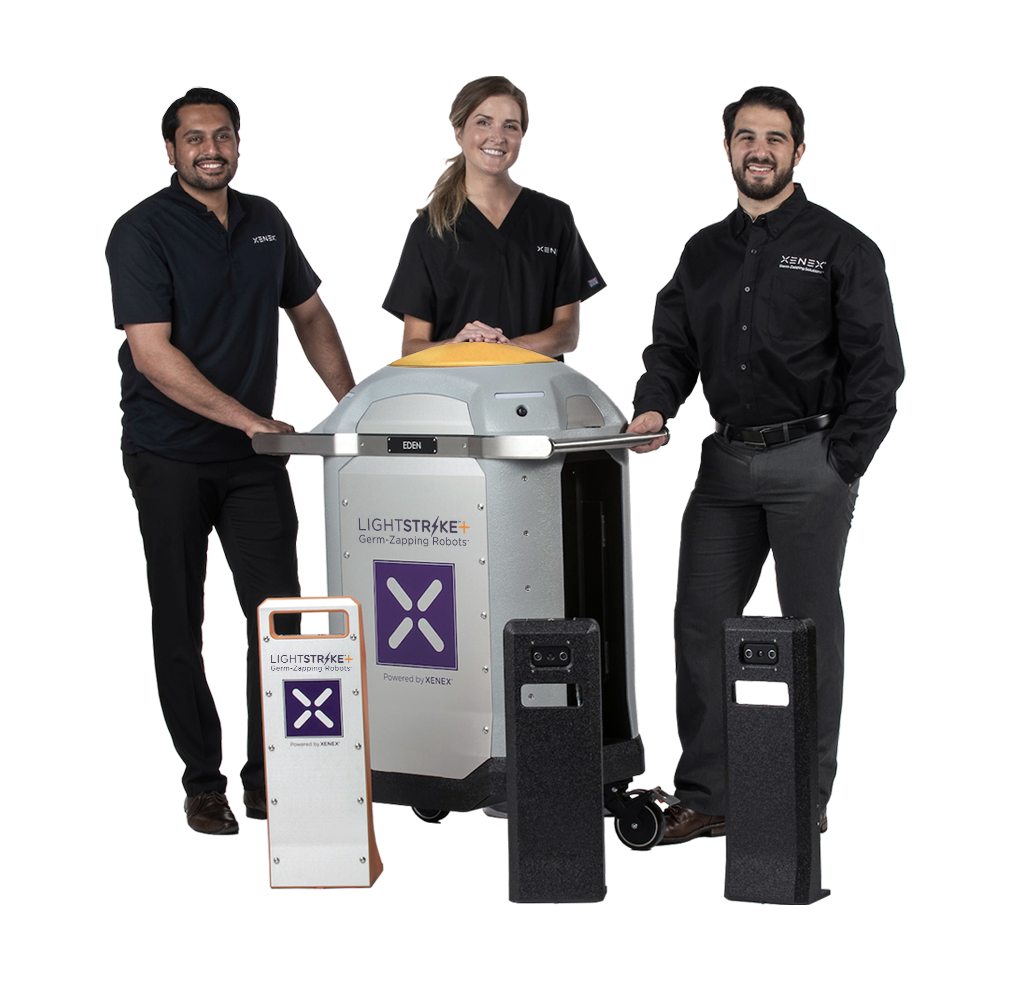
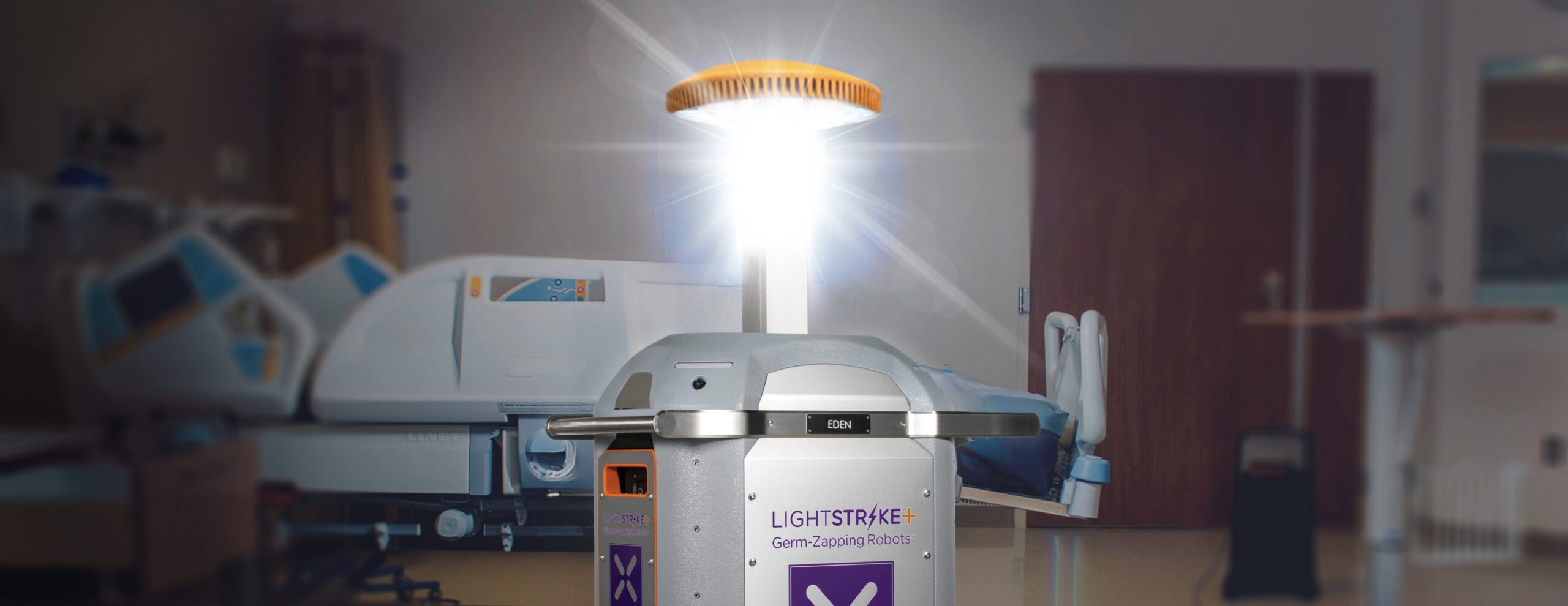
Description of the device. The PX-UV device (XenexHealthcare Services) contains a flashlamp operating at 2 Hz with an output of at least 24 W. It is approximately 48 # 40 # 100 cm and runs on 120 V. The flashlamp retracts into a heavy-duty case for wheeled transport by 1 person. The PX-UV device contains a UV feedback sensor for dose assurance, a 4-button control panel, a 30-second countdown, a remote control, and a door interlock. The PX-UV has been tested in independent laboratories against 22 organisms, including C. difficile endospores, methicillin-resistant Staphylococcus aureus, VRE, and Acinetobacter baumannii. The PX-UV device used is a certified “green” technology (Practice Greenhealth).

Room cleaning and disinfection protocols. The standard terminal cleaning for VRE isolation rooms was performed according to hospital guidelines, took approximately 30 minutes, and included the use of germicide (Wexcide; Wex-ford Labs). The PX-UV device was placed in 3 positions in the room and was run for 4 minutes in each position.

Environmental testing procedure. Samples from high-touch surfaces were taken using sterile swabs dipped in sterile 1 : 10 dilute Dey/Engley Neutralization Broth (BD) on a 6.5-cm2 area for 30 seconds while using firm pressure. The swab samples were placed in 15-mL sterile centrifuge tubes filled with 5 mL of the neutralization and transport medium. These tubes were placed in a cooler on ice and shipped by overnight courier to Antimicrobial Test Laboratories (ATL), an independent contract microbiology laboratory in Round Rock, Texas. ATL was blinded to all sample identifiers until results had been reported. Samples were held at 4—C ₃ 2—C at the laboratory until plated within 4–24 hours of receipt to determine bacterial HPCs. HPC analysis was conducted by plating the samples on R2A agar and incubating at room temperature for 5 days. VRE analysis was conducted by plating the samples on tryptic soy agar (TSA; BD) supplemented with 10 mg/mL vancomycin and incubating at 36—C ₃ 1—C for 48 hours. After aliquots were removed for quantitative plating, the collection tubes themselves were incubated for 24 hours at 36—C ₃ 1—C and then resampled and qualitatively tested for VRE by streaking a sample on TSA supplemented with vancomycin, as described above. Presumptive VRE isolates (after quantitative and/or qualitative analyses) were confirmed to be enterococci on the basis of a positive Gram stain with typical morphology and a negative catalase test result. Then, isolates’ vancomycin resistance was determined by Kirby-Bauer disk diffusion testing by using 1- and 30-mg disks.9


2     INFECTION   CONTROL   AND   HOSPITAL   EPIDEMIOLOGY

MARCH   2011,  VOL .  32,  NO .  3

TABLE  1.

Comparison of Vancomycin-Resistant Enterococci (VRE) Detection and Bacterial Heterotrophic Plate Counts

(HPCs), According to  Room Cleaning  Status

No.  (%) of  samples

HPC, CFU/cm2

No.  of

Room  status

samples

VRE positive

HPC positive

Mean (range)

Median (IQR)

Before  cleaning

75

17

(23.3)

57

(78.1)

33.0

(0–328.6) 6.2 (0.8–9.3)
After standard  terminal  cleaning

91

4

(8.2)

58

(63.7)

27.4

(0–968.7) 1.5 (0–9.3)
After pulsed-xenon  ultraviolet treatment

75

0

(0)

27

(36.0)

1.2

(0–14.7) 0  (0–1.5)
 
Hospital operational data. Time studies were conductedusing a stopwatch to determine the time needed for PX-UV room treatment and for transport of the device within the hospital.

Statistical methods. Data were entered and analyzed usingStata (Statacorp). Descriptive statistics were calculated for HPC, VRE, and operational data. Because of the nonnormal distribution of the data, a nonparametric test, the Wilcoxon-Mann-Whitney test, was used to analyze the HPC data by room disinfection status.

RESULTS

Two hundred thirty-nine samples were obtained from 21 surfaces from 12 rooms from which patients with VRE colonization and/or infection were discharged. The mean HPC for before cleaning, after cleaning, and after UV treatment was 33.0, 27.4, and 1.2 CFU/cm2, and the number of VRE-positive surfaces was 17 (23.3%), 4 (8.2%), and 0 (0%), respectively (Table 1). Of the 18 VRE samples that were analyzed quantitatively, the mean VRE count was 19.5 CFU/cm2 (range, 0.3–155.0; median, 40 [interquartile range, 0.8–27.1]). The Wilcoxon-Mann-Whitney test showed that if HPC was used as an outcome, each disinfection stage showed a statistically significantly improvement over the prior stage (Table 2).

The total time from when hospital dispatch called for room cleaning to when the room was ready for the next patient admission was 18 minutes and 48 seconds, with the total in-room time of 15 minutes following standard terminal cleaning.

DISCUSSION

The study shows that use of PX-UV is more effective than standard manual room terminal cleaning in reducing the room’s microbial burden and reducing levels of known pathogens. We found statistically significantly lower HPCs and no VRE in rooms after PX-UV treatment, suggesting that the risk to the next occupant from environmental contamination is correspondingly lower.

TABLE  2.

Impact of Standard Cleaning and Pulsed-Xenon Ultraviolet (PX-UV)

Disinfection  on Room  Bacterial Heterotrophic Plate Count (HPC)

No.  of

HPC mean,

Room  status

samples

CFU/cm2

z

P

Comparison  1

2.638

.0083

Before  cleaning

73

33.0

After standard  terminal  cleaning

91

27.4

Comparison  2

6.430

!.0001

Before  cleaning

73

33.0

After PX-UV  treatment

75

1.2

Comparison  3

4.309

!.0001

After standard  terminal  cleaning

91

27.4

After PX-UV  treatment

75

1.2

Our data show that the PX-UV disinfection system tested for the study is quick enough to be integrated into daily hospital operations without adversely affecting patient throughput.

Our study was not designed to address the impact of PX-UV treatment on HAI risk. Nevertheless, the clinical significance of improved room disinfection can be inferred from previous studies where enhanced room-cleaning protocols were used.2,3,6 It would be reasonable to assume that the PX-UV device, by significantly reducing room microbial contamination, would similarly (if not more markedly) improve patient safety and reduce HAI risk. However, prospective studies are needed to translate these promising environmental microbiological data into documentation that the PX-UV device can reduce HAI and colonization rates.

ACKNOWLEDGMENTS

Financial report. Funding for laboratory analysis was provided by XenexHealthcare Services.

Potential conflicts of interest. M.S. and J.S. are shareholders in XenexHealthcare Services. All other authors report no conflicts of interest.

Affiliations: 1. Xenex Healthcare Services, Austin, Texas; 2. Antimicrobial Test Laboratories, Round Rock, Texas; 3. Environmental Health and Safety, University of Texas MD Anderson Cancer Center, Houston, Texas; 4. De-partment of Infectious Diseases, Infection Control, and Employee Health, University of Texas MD Anderson Cancer Center, Houston, Texas.

Address reprint requests to Mark Stibich, PhD, MHS, 3019 Alvin Devane Blvd. Suite #110, Austin, TX 78741 (mark.stibich@xenex.com).

Received June 17, 2010; accepted August 18, 2010; electronically published February 4, 2011.

2011 by The Society for Healthcare Epidemiology of America. All rights reserved. 0899-823X/2011/3203-00XX$15.00. DOI: 10.1086/658329

REFERENCES

  1. Carling PC, Von Beheren S, Kim P, Woods C. Intensive care unit environmental cleaning: an evaluation in sixteen hospitals using a novel assessment tool. J Hosp Infec 2008;68(1):39–44.
  2. Huang SS, Datta R, Platt R. Risk of acquiring antibiotic-resistant bacteria from prior room occupants. Arch Intern Med 2006; 166(18):1945–1951.
  3. Drees M, Snydman DR, Schmid CH, et al. Prior environmental contamination increases the risk of acquisition of vancomycin-resistant enterococci. Clin Infect Dis 2008;46(5):678–85.
  4. Eckstein BC, Adams DA, Eckstein EC, Sethi AK, Yadavalli G, Donskey GJ. Reduction of Clostridium difficile and vancomycin-resistant Enterococcus contamination of environmental surfaces after an intervention to improve cleaning methods. BMC Infect Dis 2007;7:61.
  5. Mayfield JL, Leet T, Miller J, Mundy LM. Environmental control to reduce transmission of Clostridium difficile. Clin Infect Dis 2000; 31(4):995–1000.
  6. Wener K, Willey S, Eyre-Kelly J, Duncan R. Reduction in nos-ocomial Clostridium difficile infection (CDI) rates after terminal hypochlorite room cleaning. In: Program and abstracts of the Fifth Decennial International Conference on Healthcare-Associated Infection; March 18–22, 2010; Atlanta, GA. Abstract 200.
  7. Kowalski W. UVGI deactivation theory. In: Ultraviolet Germicidal Irradiation Handbook. New York: Springer; 2009:17–50.
  8. Kowalski W. Pulsed UV systems. In: Ultraviolet Germicidal Ir-radiation Handbook. New York: Springer; 2009:383–398.
  9. Clinical and Laboratory Standards Institute (CLSI). Performance Standards for Antimicrobial Disk Susceptibility Tests: Approved Standards—10th Edition. Wayne, PA: CLSI; 2009. CLSI documentM02-A10.

Friday Feb 04 2011 03:28  PM/ICHE31703/2011/32/3/

Download PDF Version